

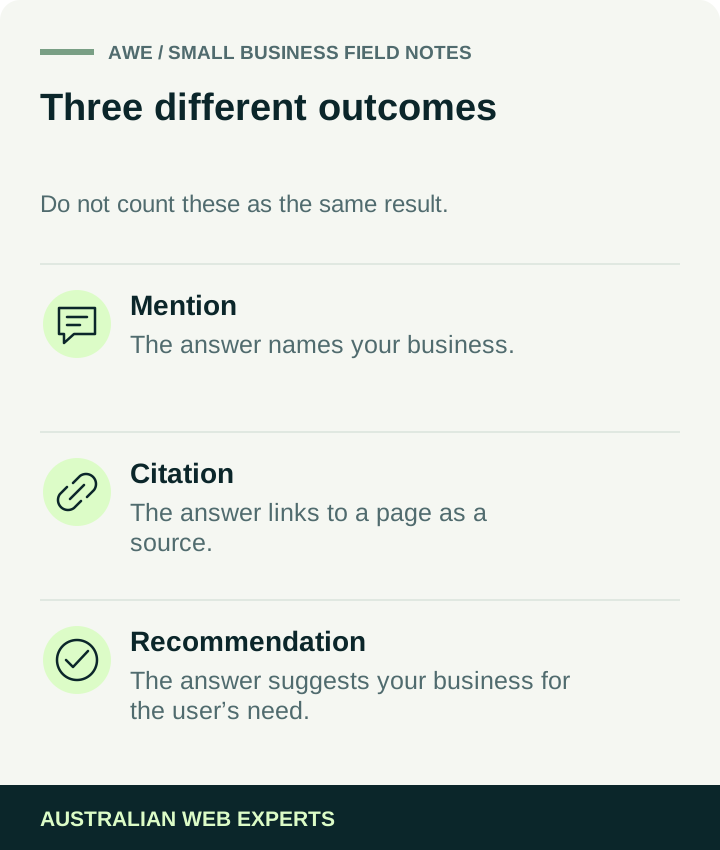
Generative engine optimisation, or GEO, is the work of improving how your business and content appear in answers produced by generative AI systems. That can include a business being mentioned, a page being linked as a source, or a provider being recommended for a particular need.
Those outcomes are related, but they aren't interchangeable. A link to your article does not necessarily mean the tool recommends your services. A recommendation doesn't tell you whether anyone made an enquiry.
For an Australian business owner, the useful question is which customer questions you want to be found for, and whether your public information gives a reliable answer.
What does GEO stand for?
GEO stands for generative engine optimisation. You may see the American spelling, “generative engine optimization”. Both refer to the same general practice.
The term appears in the research paper GEO: Generative Engine Optimization, which explores ways of measuring and improving source visibility in generated responses. The authors evaluated changes under particular experimental conditions. Their findings are not a promise that the same edit will produce the same improvement on today's ChatGPT, Gemini or Google results.
That distinction matters when an agency quotes a research percentage in a sales proposal. Ask what was tested, on which system and whether the result was reproduced for a business like yours.
How can a website become part of an AI answer?
When an AI product uses web search, it can retrieve information from pages and use that information to produce a response. The answer may include supporting links. Some answers can also rely on information already available to the model or on other tools, so you shouldn't assume that every response comes from a fresh search of the web.
For a business, this creates several things to inspect: whether its pages can be accessed, what those pages say, which other sources describe the business and what the final answer tells the user.
There is no public, universal scoring system that lets an agency certify your business as “GEO compliant” across every platform. Ask for evidence from the platforms and questions that matter to you.
A mention, a citation and a recommendation are different
The following example is an illustration written for this guide. It is not a captured AI response or a claim about a real business.
Illustrative customer question
“What should I check before hiring someone to replace my hot water system in Geelong?”
Illustrative answer excerpt
“Confirm the system type, installation scope and the provider's relevant qualifications. Example Plumbing's installation guide explains what to prepare before requesting a quote. You could ask Example Plumbing whether it services your address.”
| Part of the example | What it establishes | What it does not establish |
|---|---|---|
| The answer names Example Plumbing | A brand mention | That the business is the preferred provider |
| A supporting link points to its installation guide | A citation, if a link is actually present | That the reader visited the page |
| The answer suggests contacting the business | A recommendation or suggested next step | That the reader became a customer |
A real review should preserve the complete response and exact linked URL. Check whether the link supports the sentence beside it. It is possible for an answer to cite a useful guide while describing the business incorrectly.
This is why our AI visibility reporting guide records these outcomes separately.
What work can you do on your own website?
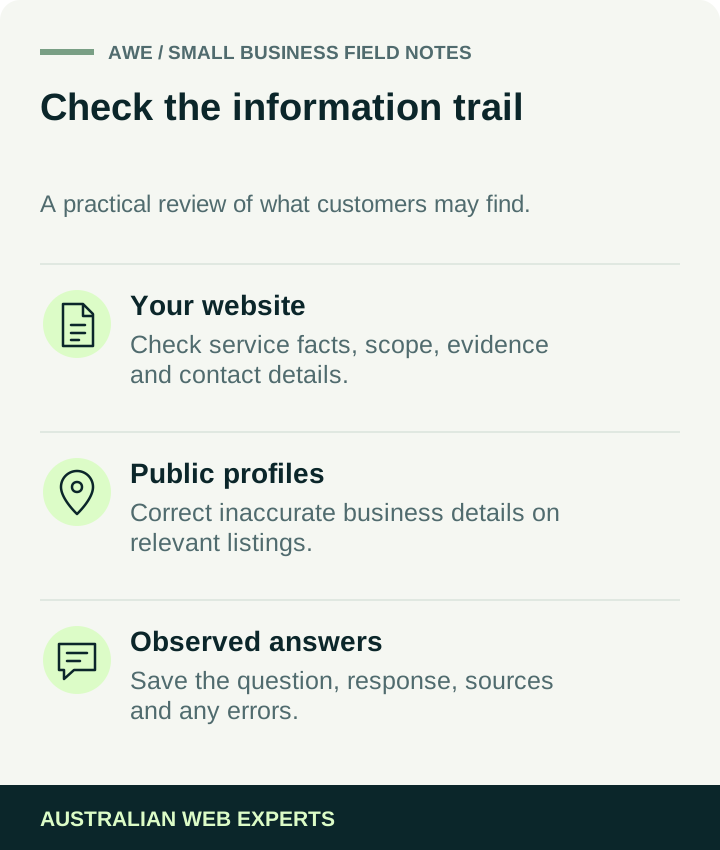
Start with the facts a prospective customer needs. What do you do? Where do you work? Who is the service suitable for? What happens after someone contacts you? Which claims can a reader verify?
For a fictional commercial cleaning company, “professional cleaning solutions” doesn't explain whether it services medical suites, offices or construction sites. A page that explains its actual experience, coverage, cleaning scope and quotation process gives the reader far more useful information.
Our recommendation is to organise those facts around genuine customer decisions. Use a clear service page for the offer, a useful guide for a complex buying question and a project example when it demonstrates relevant experience. Link between them where it helps the reader.
Avoid publishing ten articles that repeat the same definition with slightly different wording. Decide which page owns the question and make that page worth reading. If a guide is already useful, improve the missing parts instead of automatically replacing it.
What about information on other websites?
Check sources a customer might consult when assessing your business: professional profiles, genuine reviews, relevant directories, industry memberships and public coverage of your work.
The immediate job is accuracy. An old address or an incorrect service description is worth correcting because it can mislead a person looking for you. Don't turn that into a claim that every directory entry has a known effect on every AI platform.
We would prioritise sources relevant to the business and its customers. Paying for hundreds of irrelevant listings creates a maintenance job without a clear customer benefit. The same applies to fabricated reviews or claims of awards that cannot be checked.
When an AI answer describes your business incorrectly, save the answer and inspect the sources it provides. Correct the source you control or request a correction from its owner. Record what was changed and check again later. A correction on one website doesn't prove every system has updated its answer.
Does GEO replace SEO?
Keep useful SEO work in place. A customer may discover your guide through a normal search result, read an AI summary and later search for your business name. Those routes can overlap within the same buying decision.
Use SEO vs AEO vs GEO to compare the labels and the work. If a provider proposes replacing an existing campaign, ask which activities will stop and what evidence supports that decision. Changing a package name doesn't establish a better way to attract customers.
How can you tell whether GEO is working?
Choose customer questions before making changes. Include unbranded questions, where the person hasn't already named your business. Record the platform, date, location context, whether search was used, the response and its linked sources.
Repeat those checks under similar conditions. Look for patterns across multiple observations, then compare them with referral visits and qualified enquiries where you can measure them. Don't use a single favourable screenshot as the entire report.
We'd also check accuracy. Being named for a service you don't offer is not useful visibility. A report should identify those errors rather than count every mention as a win.
What should a GEO proposal include?
A clear proposal explains the current problem, the pages or profiles being improved, the evidence needed from the business and the method used to check progress. It should separate completed work from observed outcomes and state any limits in its reporting.
If you need a team to implement the agreed work, explore our SEO services and discuss the scope for your business.
Our AI SEO service brings GEO and AEO into one agreed scope, with practical deliverables and clear measurement limits.
If you're starting from scratch, our AI search optimisation guide gives you an order of work. If you'd like help applying it to your own services, talk to our team with your website and the type of customer you want to reach.
Updated 1 October 2026. Prepared by Australian Web Experts with AI-assisted drafting, source checks and worked examples. Platform guidance checked 28 September 2026; interfaces and reporting may change. Fictional examples are labelled in the text.