

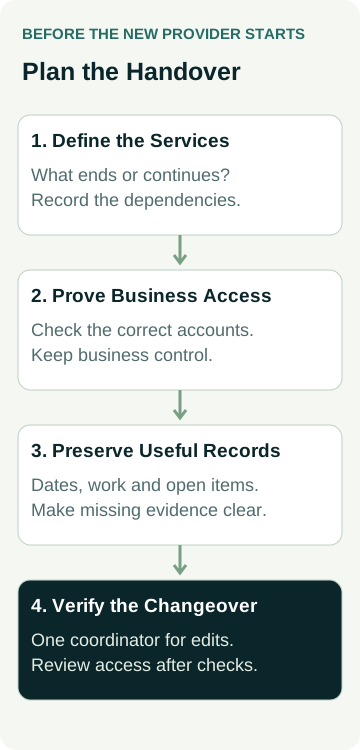
Before a new SEO provider starts changing your website, confirm three things: your business can control the relevant accounts, the new provider has the records needed to understand previous work, and everyone knows who can make live changes during the handover.
An agency change does not automatically mean a website move, a new Analytics property or a fresh start on every page. Work out what is actually changing first. That makes it easier to keep useful history, avoid conflicting edits and give the new provider a clear starting point.
Agree on the handover before agreeing on the first changes. A missing report can be recorded and investigated. Unclear control over your website or its essential accounts needs an owner before work proceeds.
Separate the SEO Change From Other Services
List what your current provider handles. SEO might sit alongside hosting, domain renewals, website maintenance, email or a reporting tool. Ending one service should not leave the status of the others to assumption.
Write down which services will end, which will continue, who will supply each one and when any responsibility changes. Check those details against your actual agreement, including notice, outstanding work, charges and permitted use of supplied material. Clarify disputed terms before setting a changeover date; paying for work alone does not settle every ownership or licence question.
Ask whether any subscriptions, listings or other arrangements depend on the old provider. Record the dependency and who will resolve it. This is a scope discussion, rather than a reason to cancel every connected account.
If you are still choosing a provider, our questions to ask an SEO company cover that earlier decision. The handover starts once you know which responsibilities are moving.
Prove Business Access Before Removing Anyone
Ask a nominated person in your business to sign in using their own account. They should be able to reach the correct website and the relevant search and measurement properties. A forwarded screenshot or an agency dashboard login does not prove control over the underlying accounts.
For each account, record its purpose, the business contact responsible for it, that person's role, the outgoing provider's access and the access the incoming provider needs. Keep passwords and recovery codes out of the handover document. Use individual invitations where the platform supports them.
The role names and removal rules differ between platforms:
- Search Console: Google distinguishes verified owners from delegated owners. Keep a business verified owner in place. Removing a verified owner's access does not remove their verification tokens; remaining tokens may let them regain access. Have the site administrator check the method and dependencies before retiring a token, because it may also be used by another Google product. See Google's Search Console permissions guidance.
- Google Analytics: Administrator and Editor have different powers; an Editor cannot manage users. Check account and property access, including inherited permissions, rather than treating a property invitation as the whole review. See Google's Analytics access guidance.
If the business cannot establish the required access, assign someone to resolve that gap with the platform or administrator. Do not ask two agencies to work around it using a shared personal login.
Request History That Explains the Current Website
The new provider needs context, rather than a folder full of unexplained exports. Ask the outgoing provider for the agreed deliverables and records you are entitled to receive, then identify what is available and what is missing.
Useful records include the current keyword and page priorities, completed changes with dates and affected URLs, content awaiting approval, known technical issues and the latest reporting period. Include any outstanding work that could still be published or invoiced after the changeover.
For measurement, identify the existing properties, tracked enquiries and known changes to tracking. Save authorised reports or exports where useful, with their date range and definitions. An export is a snapshot; do not assume it contains all history or recreates a platform's reporting.
Ask about external activity too: business listings, outreach still in progress, placements and any continuing subscription or licence. Record whether an item is completed, pending, disputed or dependent on a separate arrangement. Do not assume every link can be transferred or will remain live.
Our guide to monthly SEO reports explains reporting detail. During a handover, the immediate job is to preserve the available record and make its limits clear to the next person.
Check Readiness Before the New Work Starts
Use the table below to decide what is ready and what still needs attention. It does not require every historic document to exist. It requires a clear answer about access, evidence and responsibility.
| Handover Area | Evidence to Check | If It Is Unresolved |
|---|---|---|
| Business control | The business contact can access the correct accounts with the roles needed to administer them. | Resolve essential control before authorising changes that depend on it. |
| Work history | Available records identify completed work, pending items and gaps in measurement. | Give the new provider the gaps and agree what they will inspect before proposing changes. |
| Changeover responsibility | One named person coordinates live edits, continuing services and access removal. | Agree the boundaries and handover checks before either provider starts editing. |
Choose the start date around those answers and the actual agreement. There is no universal overlap period that suits every business. If both providers need access temporarily, define what each may do and when the arrangement ends.
A Worked Example: SEO Ends but Hosting Stays
Consider a plumbing business whose provider handles SEO and website hosting. The owner wants another agency to run SEO, while keeping the current hosting arrangement.
A broad request to “cancel everything and transfer the website” leaves important questions open. Is hosting ending? Who maintains the site? Does anyone expect to change where the domain points? Who checks the enquiry form after the new agency's first edit?
A clearer handover records that the SEO service is ending under the agreed terms, hosting continues under its own arrangement, and the new SEO provider will receive the agreed account access and work history. The owner nominates the website administrator to coordinate live edits. Any proposed hosting move becomes a separate decision with its own checks.
If the old provider cannot supply a complete change record, the owner records that gap. The incoming provider can inspect the important pages before deciding what needs work. It should not treat missing paperwork as proof that every existing page needs replacing.
This is a planning example, not a claim about a client's results or contractual rights. Its useful distinction is simple: change the responsibility you intended to change, then check the dependencies around it.
Verify the Handover, Then Review Old Access
Before closing the handover, have the new provider confirm that the supplied access works and that they understand the open items. Have the business or website administrator check the key enquiry paths after any agreed live changes. Record the date, what changed, who checked it and anything still unresolved.
Then review the outgoing provider's access against any services they still supply. Remove access no longer required using the platform's rules and the administrator's checks. Keep continuing hosting or maintenance responsibilities explicit. Deleting a shared property or account is a different action from removing a user.
Agree what the first reporting period will compare, including existing measurement gaps and any tracking changes. A provider switch cannot promise unchanged rankings or immediate improvement. The first review should distinguish the work completed, what the evidence shows and what remains uncertain.
Discuss the Scope With the New Provider
A useful first conversation covers your business priorities, what the previous provider handled, which records are available and who will implement the next work. That gives the new provider a basis for proposing a scope without guessing about the handover.
Australian Web Experts provides ongoing SEO and consulting support, with responsibilities, priorities and reporting explained before you commit. If you are considering a change, get in touch with the services you want to move and the questions still open. We can discuss the right SEO scope for your business.