

Before buying an extra domain for SEO, ask what it will actually open and why customers need it. Registering another address, redirecting it to your existing website and running a separate website are different arrangements. An extra domain is not, by itself, another useful website or a ranking result.
An Australian small-business owner may consider another address for a name variation, a campaign or a genuinely separate brand. Those can be reasonable subjects to discuss. The decision needs a clear purpose, an actual implementation and a manageable ongoing commitment.
Start by describing the customer task. If people already need the same service explanation and enquiry route, ask whether the existing website can answer it. Buying a service keyword as a domain does not remove the work of explaining the business accurately.
Separate the Domain From the Website
A domain registration gives you an address to manage under the registrar's terms. It does not tell you whether a website, hosting, email or forwarding has been set up. Ask which of those services the proposal includes and who will maintain them.
Describe what happens when someone types the additional address. Do they arrive at a page on the current site? Does the browser keep showing the extra domain while displaying copied content? Do they reach a different website? An address described as “pointing to the site” leaves those questions unresolved.
Record the current website address that customers should recognise and the proposed purpose of the extra one. If it is intended for a printed campaign, name the relevant destination. If it is intended for another brand, explain that brand's actual customer and service before commissioning a new site.
For a new service within the same business, our separate-service-page guide helps assess whether a useful page on the current site is enough. A different service name does not automatically require another domain.
Ask Which Arrangement You Are Buying
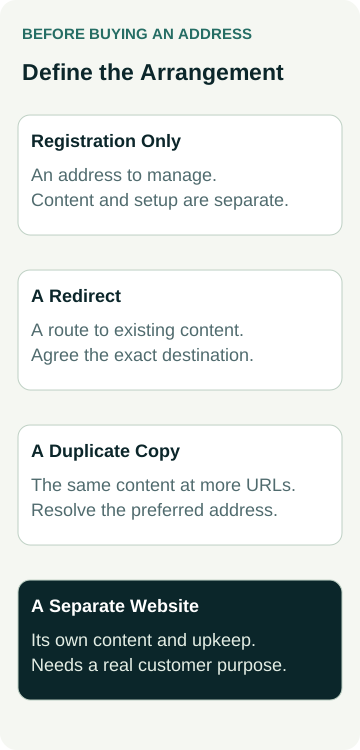
Use the proposal to distinguish these arrangements. The provider should be able to demonstrate the intended browser behaviour and explain the search work separately.
| Arrangement | What to Clarify | Search Expectation to Check |
|---|---|---|
| Registration only | The address is held and renewed; website and forwarding setup are separate questions. | Owning the name does not establish published content or search visibility. |
| Redirect to the current site | The exact destination, address behaviour and responsibility for keeping it working. | It directs visitors to existing content; do not price it as a second developed website. |
| Another address showing the same content | Whether duplicate versions are accessible and how the preferred address is handled. | Ask for consistent canonicalisation rather than assuming both copies will rank independently. |
| Separate website | A distinct purpose, useful content, enquiry route and ongoing owner for that site. | Search results need their own evidence; another site is not a guaranteed extra listing. |
The same registration could be used in different ways over time. Agree the arrangement being delivered now, with any future change treated as a separate scope.
For a campaign address, check that the destination answers the advertised offer. Sending a visitor to a generic home page may make them search again for the information they expected. Ask what happens when the campaign ends and who will review the destination.
For a separate website, list the work beyond the domain: accurate wording, images and permissions, navigation, contact setup, checking and ongoing updates. One person may manage both sites, but they still need to keep both sets of public information correct.
Treat Keyword Domains as Names, Not a Forecast
A descriptive address may help someone recognise the topic. That is different from proving that the address will rank for the phrase it contains.
Google's SEO starter guide advises choosing a name that makes sense for the business and says keywords in the domain alone have little ranking effect. Its ranking-systems guide explains that the exact-match domain system limits excessive credit for domains designed to match search queries.
Ask the provider what work supports the proposed search opportunity. Which customer question will the content answer? What real business information will be supplied? Where will suitable visitors go next? A prediction based only on the words in the domain leaves those questions unanswered.
Keep an address-management or brand reason separate from an SEO forecast. A domain held for a practical naming purpose may never need an independent website. Conversely, a genuine new brand may need a website even though its name has no exact service keyword.
Give the address a business purpose, then agree the setup and content work that purpose requires.
Understand Duplicate Versions Without Assuming a Penalty
If the same website can open under two domains, ask which address should represent the content and whether that preference is implemented consistently. The website person should inspect the actual setup; changing a label in a proposal does not change how pages are served.
Google's canonicalisation guidance describes redirects and canonical annotations as ways to signal a preferred URL for duplicate or very similar pages. Google can also choose a canonical itself. A declared preference is a signal, not a promise that every duplicate address will appear separately in search.
The SEO starter guide also makes clear that duplicate content by itself is not a manual-action penalty. That does not make copied versions a useful strategy for gaining more listings. Ask why the duplicate arrangement is needed and what visitors and search engines will actually encounter.
This guide concerns an additional address for a legitimate business purpose. Do not treat repeated copies of the same sales page as a substitute for useful information. If the proposal relies on several websites repeating the same offer, ask for a clear explanation of the distinct purpose and maintenance work before proceeding.
A Worked Example: A Campaign Address for a Garden Business
This is an illustrative business and proposal, not an AWE client or a measured result.
Example Gardens offers planting and garden maintenance through one business website. The owner is considering an additional address for a printed planting campaign. Customers following the campaign need the planting scope, relevant examples and the current quote-request route.
The owner first reviews the existing planting page. If it answers that task clearly, the extra address can be discussed as a route to that page. The proposal must still specify the destination, setup, renewal responsibility and what happens after the campaign. The owner has not commissioned a second website merely by buying another name.
Now suppose the provider proposes copied pages under the extra domain so the business can occupy more search results. That is a different arrangement. The owner asks how the duplicate content will be handled and what evidence supports the promised visibility. Registration and copying alone do not establish the result.
If the business later launches a genuinely separate commercial brand, it can assess a separate site with its own customer information and responsibilities. That later plan does not make today's campaign domain a complete brand website. Each decision follows the actual business purpose.
Include Renewals, Access and Existing Services in the Scope
Check the registration and renewal terms, who holds the account access and which setup or maintenance tasks are included. Ask for the ongoing costs you will actually incur. Do not assume an introductory price is the renewal price or that a domain purchase includes email and hosting.
If the existing address is staying, say so in the brief. If the proposal changes the main website address, it becomes a wider website-move discussion with different dependencies. Our guide to keeping email working during a website move explains why website and mail services need to be considered separately.
Ask the relevant provider to confirm any effect on current services before implementation. An extra registration should not become an unexplained change to the website, enquiry delivery or existing email. Record who can resolve a renewal or setup problem after handover.
Verify the Setup and Review the Original Purpose
After an agreed setup, verify the additional address and the intended destination, including on a phone. Check that the page explains the right business and leads to the agreed contact route. Ask the website owner to confirm the technical behaviour rather than relying only on a screenshot of the destination.
Review the reason for the address separately from any search result. For a campaign, use available campaign and enquiry evidence with the source and period recorded. For a separate site, define the appropriate search and customer-outcome observations. A working redirect proves the route works; it does not establish an increase in traffic, suitable enquiries or revenue.
To assess the SEO work behind a domain proposal, review AWE's SEO agency services or talk to Matt with the current site, proposed address and intended customer task. Agree what will be delivered before buying an address as a search strategy.