

Put both proposals against the same business problem before comparing the monthly fee. Ask each agency to identify the pages it will work on, who will implement the changes and what evidence you will receive. Then check the total commitment, your own responsibilities and what happens after the first review.
AI SEO, AEO and GEO can describe related work, but the label does not tell you what a particular quote includes. One proposal might pay for research and recommendations. Another might include writing, website changes and ongoing checks. You need those differences in writing to make a useful comparison.
Before you accept: choose one service you want more suitable enquiries for. Ask both agencies to show how their proposed work addresses that service, what they need from you and how you will decide whether the next stage is worthwhile. Leave unanswered items marked “needs clarification”.
Give Both Agencies the Same Starting Brief
Tell them which services you provide, the areas you genuinely cover, the jobs you want and the website or campaign already in place. Include a practical obstacle: perhaps customers cannot see which hot-water systems you repair, or your current reports do not explain the work completed.
Ask the agency to describe its starting evidence. That might include affected service pages, technical issues, relevant customer questions and available enquiry information. A proposal should distinguish something it has actually checked from something it plans to investigate after access is arranged.
You can use our AI search work guide to understand the broader work. The comparison here is narrower: deciding between the written scopes in front of you.
Compare the Work, Responsibility and Evidence
Copy each provider’s actual answer into the editable proposal comparison sheet. Keep a reference to the relevant proposal section so you can return to it when the wording changes.
| Compare This | Ask Each Agency | Useful Evidence Before Choosing |
|---|---|---|
| Starting position | Which services, pages and customer questions informed this scope? | Dated findings, or an explicit discovery stage with its cost and output. |
| Implementation | Who writes, edits, uploads and checks the work? What needs separate developer help? | Named responsibilities, affected pages, review steps and exclusions. |
| Search platforms | Which Google and AI experiences will you check, and why do they matter here? | Relevant question set, platforms, context and repeatable observation method. |
| Proof of previous work | What did you change for a comparable business, and what was observed afterwards? | Work examples, starting period, limitations and results you can discuss with permission. |
| Reporting | How will I see completed work, visibility, visits and suitable enquiries separately? | A sample report with definitions, dates, evidence and proposed next actions. |
| Cost and commitment | What is due upfront and ongoing? What extra work or tools could be charged? | Agreed fees, GST treatment, minimum term, exclusions and approval process for extras. |
| Ownership and exit | What accounts, content and records do I retain, and how is handover handled? | Written access, ownership and handover arrangements for this engagement. |
An unanswered row is a question to resolve. It should not become a zero in a scoring system that makes a vague proposal look precise.
Check Who Will Turn the Audit Into Live Changes
An audit can be useful when you need to establish priorities. Ask what happens to the findings: does the fee cover a report only, or will someone complete the agreed changes? If your existing developer must implement them, include that person’s availability and separate cost in the comparison.
For content work, ask which pages are included and how the agency will obtain accurate business information. Who interviews your team, checks claims, supplies approved images and publishes the final page? A quota of articles leaves those responsibilities open.
Also check how the new scope fits your existing SEO work. Ask both providers to identify tasks already covered, genuinely additional tasks and work that would move between teams. Paying twice for the same task is a scope problem you can resolve before the engagement starts.
Ask What the Claimed AI Requirement Applies To
Ask for the platform and official guidance behind any proposed technical change. Google’s AI features guidance says its existing SEO foundations apply to AI Overviews and AI Mode, with no extra special schema or AI text-file requirement. A proposal should explain the business or technical need for a task rather than treating a new file or acronym as a shortcut.
If the scope includes structured data, check what the schema implementation and validation will actually establish before accepting a search appearance promise.
Other platforms have their own controls. For example, OpenAI’s crawler documentation distinguishes OAI-SearchBot, used for search, from GPTBot, associated with model training. Ask the technical owner to explain which access setting affects the intended task and how it will be checked. A blanket “allow every AI bot” recommendation needs more detail.
This is a reason to ask informed questions, not an instruction to change your own crawler settings during a sales conversation.
Read the Proof With Its Starting Point and Limits
Ask to see a relevant piece of work and the evidence supporting the claimed result. Google’s advice on hiring an SEO recommends questions about previous work, experience, communication and success measures. You can apply those questions to an AI search proposal too.
For a citation example, ask for the exact question, platform, date, context and complete answer with the source link. Establish whether the business was named, recommended or linked. If the example used the client’s name in the question, keep it separate from an unbranded customer discovery question.
For a traffic or enquiry claim, ask for the starting values, period and source. Check whether the enquiries were relevant to the service and whether won work was actually recorded. A percentage without those details gives you little basis for comparing providers.
Google does not guarantee indexing or serving content even when its requirements are met. Ask the agency to commit to work it controls and explain how it handles uncertain search outcomes. A promised result in a particular AI answer should not substitute for a clear scope.
Worked Example: Two Quotes Buy Different Things
Consider an example electrical business that wants more enquiries for switchboard upgrades. Its service page gives little detail about the jobs it handles, and the owner has an existing developer.
Proposal A includes a technical review, a question log and a monthly visibility report. Website implementation is excluded. Proposal B includes a review, improvements to the switchboard page, an agreed business-facts check and reporting. The owner must supply accurate service information and approve the copy; implementation responsibility still needs confirmation.
The owner asks A’s provider and the existing developer for the cost and timing of acting on the findings. They ask B’s provider who uploads the changes, checks the enquiry path and handles any platform limitation. Both proposals remain under review until those answers are recorded.
If the owner has capacity to implement a clear plan, the research-only scope may fit. If they need someone to complete the website work, that responsibility must be included or separately arranged. The decision follows the need, the complete cost and the available people. Neither example has a measured lead result or a completed engagement behind it.
Agree on Review Decisions and the Total Commitment
For the period you are comparing, add the setup fee, ongoing fees, separately required implementation and agreed tool costs. Confirm what includes GST and what happens if the scope changes. Ask about the minimum term, cancellation notice and what work or records are handed over. These are questions about the proposed agreement; avoid assuming every agency uses the same terms.
Ask what the first review will decide. There should be a way to assess completed work and choose the next priority when visibility or enquiries remain uncertain. For the measurement detail, use our AI search visibility guide. Google currently includes its AI-feature traffic within overall Web search reporting in Search Console; an agency should explain the source behind any more specific figure it shows you.
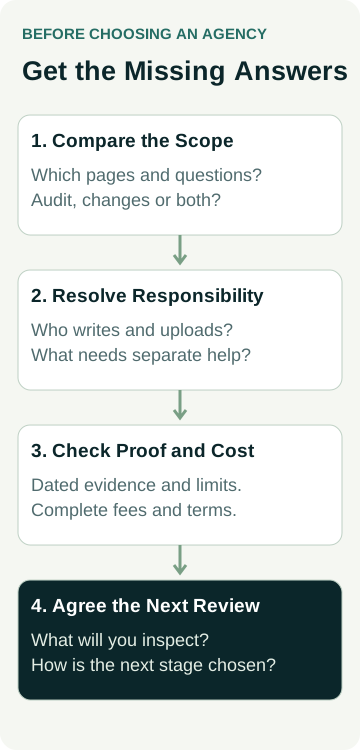
Before choosing, work through three steps:
- Resolve missing responsibilities, costs and access requirements in writing.
- Compare the scope against the service and buying questions you want to support.
- Agree on evidence, review decisions and the next stage before accepting the proposal.
Our AI SEO service explains the review, implementation and reporting work we can scope with your business. To discuss suitable help, contact Australian Web Experts with your website, priority service, current SEO arrangements and the parts of the scope you need clarified. Leave credentials and confidential third-party material out of an initial enquiry.