

Before approving schema markup work, ask the provider to name the pages, the information it will describe and the checks you will receive. A successful code test does not guarantee a particular Google search appearance. You need an accurate implementation, a clear explanation of its purpose and someone responsible for keeping it current.
Schema markup is structured information added to a web page so machines can interpret what the page describes. For a service business, that might include information about the organisation or its services. The useful buying question is what will be added to your actual website and how the provider will confirm that it represents your business correctly.
Before you approve the work: request a page list, proposed facts, the intended search feature where applicable, implementation responsibilities and separate records of technical checks and later observations.
Start With the Page and Its Real Information
Ask the provider to show the page it intends to describe. Read it as a customer first. Does it explain the actual service, the business providing it and the next step? If the visible information is wrong, agree on the correction before treating markup as finished work.
For example, a service description might include an old offer or contact number. Copying that information into structured data reproduces the mistake. Adding more properties does not resolve a disagreement about what the business actually does.
Google's general structured data guidelines require a true representation of the page content and warn against misleading information or marking up content readers cannot see. Have the business person check the proposed facts and the technical person check their implementation.
Ask how those facts will be sourced. Existing website wording, an approved business profile and confirmation from the service manager can serve different purposes. A provider should flag contradictions rather than quietly choose whichever version fits a generator. Our guide to supplying business information for SEO content covers the wider factual review.
Separate a Vocabulary Type From a Search Feature
Schema.org provides a vocabulary for describing things. Its Service definition, for example, describes a service provided by an organisation. That definition alone does not establish how Google will display a service page.
Google's structured data introduction says its own documentation is definitive for Google Search behaviour. Schema.org includes attributes and objects beyond those required by Google Search. If a quote promises a particular rich result, ask the provider to identify the current Google feature documentation and explain why your content qualifies.
Use Google's supported structured data feature gallery as the starting point for that explanation. The provider should connect the proposed feature to your page, its required information and its content rules. A list of schema types is not enough to establish eligibility.
This also keeps an ordinary service page from being described as something it is not just to pursue a search treatment. Your business information should determine the representation. Keep questions about particular FAQ or review appearances tied to the current feature rules rather than assuming every example found online remains applicable.
Agree Who Controls the Delivered Markup
Find out what your website already produces. A theme, plugin, custom template or another integration may supply structured data. Ask the technical owner to inspect the combined output before adding another source.
Several structured data items on a page are not automatically a problem. Google's guidelines allow multiple items that reflect the content. The practical concern is whether the delivered items describe the right things consistently, with relevant relationships and accurate information.
The scope should name the pages or templates being changed, the person making the change and the existing output being retained, corrected or replaced. It should also identify any paid plugin or separate development cost before you approve it. An audit recommendation and a completed website change are different deliverables.
Ask what happens when a new service page is added. Does the agreed template supply the right information, or does someone need to configure it? A sample passing on one page does not show that every page sharing a template has correct business facts.
You can place this task within the wider work described in our technical SEO guide. Keep the schema proposal specific enough to review without buying an undefined promise to optimise everything.
Ask What Each Check Actually Establishes
Request the tested URL or version, the tool used, the date and the result. Where a test returns warnings or does not recognise a proposed feature, ask for an explanation tied to the intended implementation. A green screenshot without its page and scope leaves important questions unanswered.
| Check | Useful Evidence | What Remains Separate |
|---|---|---|
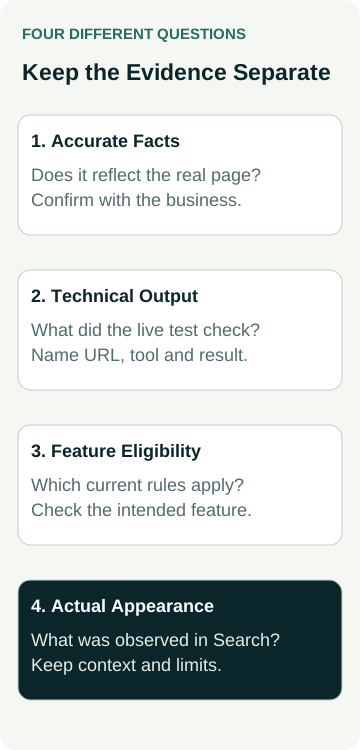
| Business facts | Approved information compared with the visible page and delivered markup. | Whether a search platform uses or displays it. |
| Technical output | Relevant validation result for the exact delivered page, with issues explained. | Content accuracy and rules that automated tests cannot establish. |
| Feature eligibility | Current Google feature rules considered against the page and implementation. | Whether Google chooses that appearance for a particular search. |
| Search observation | Dated result or relevant Search Console evidence with URL and conditions. | Causation, qualified enquiries and business revenue. |
Google says automated tools cannot easily test its structured data quality guidelines. Its general guidelines also state that correct markup, including a successful Rich Results Test, does not guarantee display in search results.
Agree on checks during development and after the change is live. The structured data introduction notes that templating or serving issues can break validity after deployment. Ask the provider to verify the delivered public version rather than hand over only a test of a code sample.
A Worked Example: A Service Scope Becomes Specific
Illustrative example: an air-conditioning service business receives a proposal to add schema across its website.
The initial quote says “schema implementation and validation”. The owner asks which pages are covered and what information will be used. The provider identifies the organisation information and two service pages, then notices that one page still describes an installation service the business no longer offers.
The service manager confirms the current repair and maintenance work. The owner approves corrected visible wording. The technical owner reviews existing template output and explains which records will be retained and which need updating. The parties agree who implements the changes and who checks the published pages.
The revised scope separates business approval, technical validation and any later search observation. If a rich result is part of the intended work, the provider must identify the applicable current feature and its requirements. Otherwise, the description of the deliverable should explain the representation being added without inventing a special search appearance.
At handover, the owner receives the affected page list, approved facts, implementation record and relevant live checks. A later search review has its own evidence and limitations. The example assumes no ranking lift, AI citation or extra enquiry; it shows what the owner can ask to make the purchased work reviewable.
Name the Update Owner Before Handover
Business details change. Agree who checks the markup when services, contact details or other represented information change. Confirm whether an ordinary website edit updates the relevant output or whether a separate action is required.
Keep a short record of the information source, affected templates and responsible person. The business owner should know whom to tell when a fact changes. The website owner should know where the corresponding representation is controlled. Neither needs to guess which of several plugins supplied an old detail.
Record the live change in an SEO change log and keep later outcome evidence separate. If several website changes happened together, acknowledge that a traffic movement cannot be assigned to schema alone from its timing.
Compare the Specific Work Before Accepting
When two quotes use the same label, compare their affected pages, factual review, implementation, live checks and maintenance responsibilities. Confirm exclusions and any additional costs. Ask for clarification where a promise about search visibility has no defined feature or supporting method.
Our AI SEO proposal comparison guide helps with the broader engagement. For this task, bring the discussion back to your pages and the evidence the provider can deliver. A schema test does not establish an AI recommendation or a sale.
To discuss technical work within your campaign, review AWE's SEO services or contact Australian Web Experts with the affected pages and the proposal you want to clarify. Agree the actual scope before assuming a particular schema implementation or ongoing maintenance is included.