

Before paying someone to answer your Google reviews, agree what they may publish, which facts they must check and when a reply needs your approval. A provider can help with the workload, but its public wording still represents your business.
Ask to see the proposed process using sample reviews before connecting anything. Separate monitoring, drafting, approval, publication and follow-up. A service described as “review management” may include some of those tasks and leave others with you.
The useful buying decision is how to handle feedback accurately and consistently. Keep promises of more reviews, better ratings, removed criticism or improved rankings separate from the reply-writing scope. None of those outcomes is established by producing a polite response.
Define the Work Before Choosing the Automation
List the profiles and types of feedback the provider would cover. Confirm whether the service monitors new reviews, prepares wording, waits for approval, publishes replies or alerts your team to a problem. Ask how edited reviews and existing replies are handled, rather than assuming every item is new.
Review invitations are another task. Our review-request service guide covers the customer rule, neutral message and sending process. Permission to answer an existing review should not quietly become permission to contact a customer list or start a new invitation campaign.
Ask which parts involve people and which involve software. If a tool drafts wording automatically, find out what information it uses and what review happens before publication. A demonstration should show the actual approval behaviour proposed for your business, including what happens when nobody approves a waiting reply.
Choose the workflow around your capacity. If the owner must supply facts for complaints, allow for that work in the arrangement. Outsourcing the writing does not make the provider an eyewitness to the job or give it authority to decide a refund, revisit or replacement.
Give the Writer Facts and Clear Boundaries
Prepare a short business brief with your service names, contact route and established tone. Add examples of wording you have approved, with personal details removed where they are unnecessary. Explain terms your customers use so the writer does not misinterpret the work.
Then define statements that require confirmation. These might include what happened during a visit, whether someone has already been contacted or whether corrective work is complete. A response should not say “we have fixed this” merely because that sounds reassuring.
Agree who can authorise commitments. A discount, free visit, booking, callback deadline or policy exception can create work the business has not approved. Give the provider a clear way to request a decision instead of filling the gap with a helpful-sounding promise.
Google's reply-writing guidance recommends clear, helpful, concise responses, a conversational approach and protection of private information. Keep that advice alongside your own facts and tone. Avoid turning every reply into an advertisement or forcing the same service-and-suburb wording into unrelated feedback.
Set Approval Rules Around the Content
A star rating alone is a weak approval rule. A favourable review can mention a staff member, personal circumstances or an issue requiring care. A short complaint may need a straightforward acknowledgement, while another needs factual investigation before anyone speaks publicly.
Use sample cases to agree the route:
| Review Content | Route to Agree | What Must Be Clear |
|---|---|---|
| Routine thanks with no unresolved issue | Draft or publish within a clearly approved routine scope | Tone, permitted detail and publication authority |
| Disputed work, timing or charges | Hold factual claims for the responsible business person | What is known, what is uncertain and the approved next step |
| Staff, safety or sensitive personal details | Escalate for the owner's appropriate review | Who handles the concern and what can safely be said publicly |
| Unclear identity or suspected policy issue | Investigate and record a separate decision | No invented customer history or assumed removal outcome |
This is a proposed operating record. It does not grant a supplier permission to publish or decide what is appropriate for every business. You may choose to approve all replies, particularly while learning how the service works.
Test the awkward cases in the demonstration. Can a held reply be published by a different workflow? What happens when an alert is missed? Who can correct the routing? Ask the provider to explain the actual controls, rather than accept a dashboard label as proof that approval is enforced.
Keep Public Wording Separate From Private Follow-Up
Treat the reply as a public message. Other readers may see it without knowing the job history. Keep it understandable, relevant and grounded in what the business can confirm.
Google advises against sharing a reviewer's private information or making personal attacks. For a complex situation, its guidance suggests inviting contact by phone or email to discuss it privately. Agree the contact route and who will respond before the provider uses it. A private conversation still needs its own handling arrangements; moving channels does not resolve the issue by itself.
Do not copy job records or a long account of a disagreement into the public draft to win an argument. Give the approver enough context through the agreed internal process, and decide which limited information belongs in the public response. Seek appropriate specialist help for matters outside the business's ordinary customer-service process.
If you believe a review breaches Google's policies, treat a report to Google as a separate task. Google's review-management guidance explains that a suspected policy violation can be flagged. A supplier's decision to flag something does not establish that Google will remove it, and a critical opinion is not automatically evidence of a policy breach.
A reply can acknowledge feedback without inventing the job history, promising a remedy or declaring a complaint resolved.
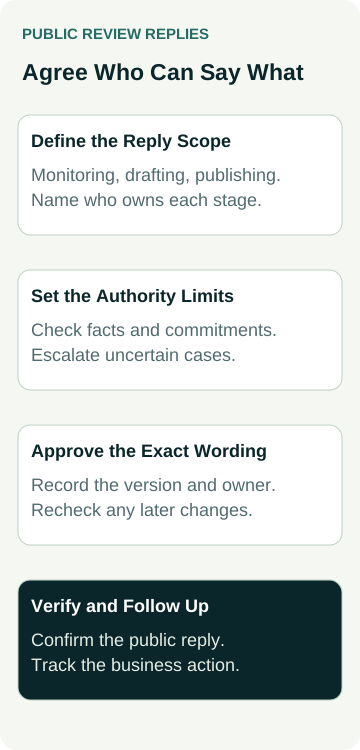
A Worked Example: A Repair-Visit Complaint
An example appliance-repair business considers outsourcing review replies. One sample review praises the technician but questions a change to the expected visit time. The proposed tool initially routes it as routine positive feedback because the rating is favourable.
The owner asks for the content of the complaint to trigger review instead. The person who schedules visits checks what the business can confirm. Until that check is complete, the draft must not assert that the customer agreed to the change or that the issue has been resolved.
The business also decides who can arrange a follow-up. The writer may suggest wording for approval, but cannot promise a free visit or a particular callback time without authorisation. The owner approves the final wording and the actual next step as separate decisions.
The provider is then asked to show where the approved version is recorded, who could publish it and how the business would verify the visible reply. These are proposed buying and workflow decisions, not a real customer case. No reply has been published, complaint resolved or change in ratings, calls or bookings measured in this example.
Check Publication and Corrections Separately
Ask for a short record linking each review to its draft, approval decision and publication status. Keep the approver and approved wording identifiable. If wording changes after approval, agree whether it must return for review.
Google explains that it reviews replies against its policies and that an approved reply appears publicly under the customer's review. The reviewer is notified when you reply. Therefore, distinguish a draft, business approval, submission and a reply actually observed as public. A dashboard count of completed items may not describe the same stage.
Agree how the provider checks the result and reports an item that is still pending or unavailable. Also decide who handles an incorrect reply, an updated customer review or wording that needs correction. Do not assume that a private resolution automatically updates the public record.
Keep the agreed process with your SEO change log if the work forms part of a wider campaign. The record should describe the actual work, limitations and follow-up, rather than list every drafted response as a successful customer outcome.
Review the Service Beyond Reply Counts
At the first review, inspect a small selection of actual work with the provider. Include routine replies, items held for facts and an escalated concern. Check whether the wording matches approved facts and tone, whether commitments stayed within authority and whether the right person received the follow-up.
Ask the reporting to distinguish:
- Reviews observed and drafts prepared.
- Replies awaiting facts or approval.
- Replies verified as public and corrections made.
- Business follow-up assigned and its known outcome.
Enquiries, accepted jobs and paid work need their own evidence. A faster reply or a changed review does not establish that the service produced a sale or improved your local ranking.
If review handling is part of a broader local-search discussion, explore AWE's local SEO services. Bring your proposed reply rules and current responsibilities. Confirm the exact monitoring, writing, approval and publishing work in the scope rather than assuming it is included in a campaign.