

When your business stops offering a service, make the website explain that change accurately. Before deleting its page or sending visitors elsewhere, agree whether the old information still helps customers, whether a genuine replacement exists and who will update the places that still promote the work. Search traffic needs to be considered alongside the service you can actually deliver.
An Australian small business may stop one type of job while continuing related work. The old service page can still appear through a saved link, a referral or search. Leaving a quote button and an outdated offer in place can invite requests the business will decline.
This is a focused service-change task. You can address it on an existing website without treating it as a whole-site redesign. The business owner confirms the offer; the website and SEO people agree how the page and its connected information should reflect that decision.
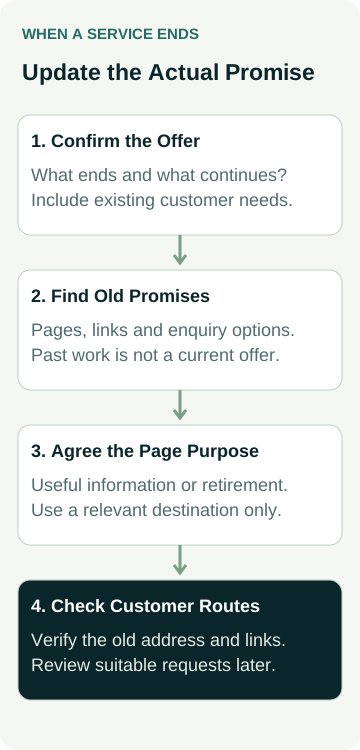
Confirm the Business Decision Before Changing the Page
Write down what is ending and what continues. Distinguish permanent retirement from a temporary capacity limit or a service that is still available to existing customers under an agreed arrangement. Ask the person responsible for delivering the work to check the wording.
If the return date is uncertain, do not publish an invented date. If the business plans to offer a replacement but has not confirmed it, keep that plan separate from a service customers can request today. Record a review owner for any unresolved decision.
Consider existing customers as well as new enquiries. Someone may need instructions, project information or a contact route about work already completed. Retiring the sales offer does not automatically settle what information those customers still need.
Our separate-service-page guide helps determine whether current work needs its own explanation. Here, the starting point is different: the advertised work is ending, so the page's purpose and customer message need to be reassessed.
Find Where the Old Offer Still Appears
Start with the service page and follow the routes that bring people to it. Check the services overview, menus, related articles, project captions and enquiry options. Ask the business's SEO or website person to identify relevant search listings and external business information they manage.
Record the exact location and the promise it makes. A gallery caption describing a past job may still be accurate. A nearby sentence saying the business offers that work now may need correction. Read the whole context rather than deleting every mention of the service name.
| Place to Review | Message to Check | Person to Involve |
|---|---|---|
| Service page and contact prompts | Does the wording still invite requests for the retired work? | Business owner and website editor. |
| Navigation and related page links | Does the route describe the destination accurately? | Website owner reviewing the affected pages. |
| Project examples and guides | Is past work being presented as a current offer? | Person who can confirm the facts and customer context. |
| Managed business listings and enquiry options | Is the old service still selectable or promoted? | Responsible listing or enquiry-system administrator. |
This is a scope list, not permission to change every account. Give the agreed edits to the people who manage those systems. Mark anything you cannot inspect as unknown, with a responsible person and next action.
Check the page's relevant search and enquiry evidence where it is available. Keep the source and period. Traffic alone cannot tell you whether visitors want the retired work, need help with an old project or are looking for a current alternative. Our query-to-service-page worksheet can help organise that distinction.
Choose What the Old Address Should Do
A retained page needs a clear present purpose. It might explain that the service has ended while providing useful information for existing customers. Remove the invitation to request unavailable work and make the remaining contact route precise. A historical explanation should read as historical information.
If the same customer need is now genuinely answered by another current page, discuss a relevant destination with the website owner. Ask what someone seeking the old service will find there. A vaguely related service is not necessarily a substitute: the scope, customer and next step must make sense.
Google's redirect guidance distinguishes permanent and temporary moves. The developer should choose and verify the appropriate implementation after the business and destination are agreed. A redirect does not make an inaccurate replacement offer suitable.
Where the content has ended, offers no continuing useful explanation and has no relevant replacement, removal may be appropriate. Google's HTTP status guidance explains how not-found responses are handled and why a page saying “not found” while returning a success response can be a soft 404. Ask the developer to check the actual response; a friendly message on screen does not prove the technical status.
Avoid choosing the home page merely because it is available. Ask whether that destination answers the original customer need. If it does not, a clear retirement response with helpful navigation can be more honest than an unexplained detour. There is no promise that any choice will preserve the old page's rankings or traffic.
Agree the customer message and purpose first. Then have the website owner implement and verify the address behaviour.
Keep Search Removal Separate From Website Accuracy
An outdated search result and an outdated website page are related problems, but they are not the same task. Correct the information and the agreed page behaviour at the source. Removing a menu link alone does not settle what a visitor finds at the old address.
Google's removal guidance explains that requests through its Removals tool are temporary; permanent removal needs an appropriate lasting method. Ask the website or search owner whether a tool request is warranted. Do not treat it as a replacement for correcting the website or as a routine requirement whenever a service ends.
Search results may take time to reflect a change. Verify the website's current message separately from later search observations. A correct live update does not establish when every old result will disappear, and a temporary hide does not establish that the underlying offer has been fixed.
A Worked Example: Lawn Treatments End, Garden Work Continues
This business and decision are illustrative, not an AWE client or a search-performance result.
Example Gardens stops providing chemical lawn treatments but continues planting and ordinary garden maintenance. Its old lawn-treatment page includes an enquiry button, and a services overview still links to it as current work. A past project caption accurately describes a treatment previously delivered.
The owner confirms that planting is not a replacement for chemical treatment. Sending all visitors to the planting page would not answer the same need. The owner also confirms that existing customers need a contact route for questions about completed work.
The team proposes a clear retained information page explaining the service's end and the limited purpose of the contact route. They remove the sales invitation and update the services overview. The past project can remain if its context makes clear that it is historical and does not promote a current treatment offer.
That proposal still needs an agreed implementation and review. If useful customer information later moves elsewhere and the old page has no remaining purpose, the owner can ask for a separate retirement assessment. Neither decision is based on an invented traffic target or a claim that a redirect will save every ranking.
Verify the Affected Customer Routes
Ask for checks of the old address, the agreed destination or retained page, the relevant internal links and the enquiry options. Include a phone view. Someone following an old referral should understand the change and avoid submitting a request for unavailable work through an unchanged service selector.
Give the people answering enquiries the same approved explanation. Record what is still available, whether there is any confirmed alternative and who handles questions about past jobs. Do not imply a referral partnership or a replacement supplier unless the business has agreed one.
Keep a dated change record containing the affected locations, approved wording, implementation and checks. Our SEO change-log guide helps distinguish work completed from work proposed. The record should allow another person to see why the change was made and what remains unresolved.
Review Suitable Demand After the Change
Review whether requests for the retired service continue and where those customers say they found the offer. Separate that from searches and enquiries for the work the business still wants. If an old managed listing is generating unsuitable requests, it becomes a specific follow-up rather than a reason to reverse the entire website decision.
Agree the observation period, sources and reviewer. Search clicks, suitable enquiries and accepted work are different outcomes. A fall in visits to a retired offer is not enough to assess the performance of the remaining business, and a changed enquiry count cannot be attributed to this edit without further evidence.
To plan the search work around your current services, review AWE's SEO agency services or talk to Matt with the retiring service, its existing page and the customer information that still needs to be available. Agree the exact affected scope before anyone removes or redirects a page.