

Choose the first channel around the work you want, when you need enquiries and what you can afford to learn. Google Ads can be worth assessing when you want to reach relevant searches through a paid campaign. SEO can be worth prioritising when you can invest in improving your website’s organic visibility over time. Neither route guarantees enquiries or profitable work.
For an Australian small service business, the choice also depends on what happens after someone clicks. If the website explains the wrong services or enquiries do not reach you, address that problem before increasing traffic.
You can use both channels, but you do not need to buy both simply because a proposal offers them. Ask why each belongs in your first stage, which costs it adds and what evidence will help you decide whether to continue.
Start With the Work and the Deadline
Name the service you want to promote, the customers you can help and your actual service area. Add the jobs you do not take on. “More leads” is too broad when extra requests for the wrong work create a burden.
Then explain your timing. Are you trying to fill near-term availability, introduce a service or build a steadier source of suitable enquiries? An urgent need is a reason to discuss paid search; it does not prove that a campaign will produce work in time.
Google’s explanation of how Google Ads works describes an auction that determines whether an ad is eligible to appear and where it appears. Paying for a campaign does not buy every search or a permanent top position. Ask a provider to explain the targeting, landing page, competition and budget assumptions behind its recommendation.
For SEO, ask what can be improved on your current site and who will carry out that work. Google’s SEO starter guide explains that changes can take different amounts of time to affect search, and some will have no noticeable effect. It offers no automatic route to first place or guaranteed indexing.
Keep the business deadline and the proposed review period separate. If you need work quickly, ask what other existing channels can support that need while the search plan is assessed. Do not commit money you cannot sustain on the assumption that the campaign will pay its own bill immediately.
If the deadline comes from a recurring busy period, plan the seasonal service work and customer dates before choosing the first campaign stage.
Compare Three Sensible Starting Points
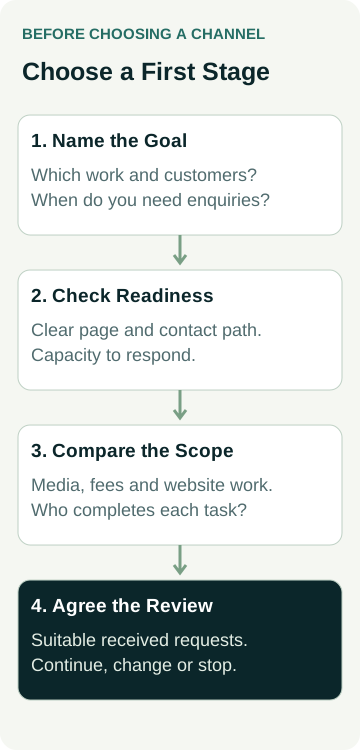
The first decision can include a readiness step. More traffic is useful only when the right visitors can understand the service and take a working next step.
| Starting Point | When to Discuss It | What to Resolve Before Committing |
|---|---|---|
| A scoped Google Ads campaign | You want to assess paid search for a specific service, area or near-term demand. | Relevant searches, a suitable landing page, enquiry handling, separate media and management costs, and a review with clear spending controls. |
| SEO as the first priority | You want to improve organic discovery and can support the proposed website and content work without relying on an immediate return. | Current search evidence, pages and problems to address, implementation responsibilities, ongoing costs and how progress will be reviewed. |
| Fix readiness first | Visitors cannot understand the offer, the enquiry route is unreliable or nobody can respond to suitable requests. | The demonstrated problem, person who will resolve it and check that will establish readiness for more visitors. |
These options can be staged. You might resolve a contact fault, improve a service page, then assess a paid campaign while continuing useful SEO work. The sequence should follow the evidence and available capacity, rather than a fixed “ads first” rule for every new business.
If the website is ready and you can fund both, ask each channel to have a clear job. For example, paid search could assess demand for one service while SEO addresses relevant pages more broadly. Agree how the provider will distinguish the results and review the combined cost.
Before buying traffic, confirm which customer you want, what page they will see and who will respond when they enquire.
Compare the Full Commitment
Ask for advertising spend and the provider’s fee as separate figures. Also clarify setup, landing-page changes, measurement work and anything charged separately. A quote for campaign management may exclude the money paid to Google.
Discuss the spending controls for the proposed campaign. Google’s spending-limit guidance says that, for most campaigns, spending on a day can reach twice the average daily budget, with a monthly limit generally based on 30.4 times that budget. Campaign type and budget changes matter. Have the provider explain the applicable limits and approval process; an average daily setting is not necessarily a fixed daily ceiling.
For SEO, compare the work included, who implements changes and the cost of continuing. Organic results do not charge you an advertising fee for each click, but the work to create and maintain useful visibility still has a cost. Rankings are not an asset you permanently own or a guaranteed future stream of customers.
Google’s guidance on hiring an SEO separates advertising from organic inclusion and ranking. Advertising with Google does not improve your organic position by itself. Ask for the SEO work to be identified separately if a provider sells a combined plan.
Use one comparison period and the same business objective for both proposals. Note fees, tax basis, ongoing commitments, exclusions and what happens if you stop. You cannot establish the cheaper source of useful work from a media budget or retainer alone.
A Worked Example: A New Service With Limited Evidence
An example carpet-cleaning business has regular referral work and wants more end-of-lease cleaning enquiries in its confirmed service area. It has availability to accept that work, but its main page gives little detail about the service and the owner has not checked form delivery.
The first step is to improve the relevant information and test the contact route. The owner also decides what details make a request suitable and how quickly the team can respond.
With those gaps resolved, a provider proposes a scoped paid-search campaign for that service and area. The owner asks for separate media and management costs, the assumptions about relevant searches, spending controls and the evidence to review. A trial is a way to learn whether the campaign attracts suitable requests; it is not a promise to fill the diary.
The business can also consider SEO work on the service page and other relevant parts of the site. That work needs its own scope and review. The owner does not assume that a successful ad automatically means the same term will rank organically or produce the same result there.
Now change the timing: the business has steady work and wants to improve organic discovery over a longer period, with capacity to supply content and implement changes. SEO may be a sensible first priority to discuss. The choice changes with the objective, readiness and affordable commitment, rather than a rule based only on business age.
Agree on the Evidence Before the Campaign Starts
Record what a useful enquiry means for your business. It might be a request for an offered service in an area you cover, with enough information to respond. Keep spam, duplicates and tests separate.
Agree on the first review before work begins:
- Record the starting website, relevant search evidence and current enquiry process.
- Name the work to complete, costs to incur and people responsible.
- Define what contact actions are measured and how received requests are recorded.
- Choose a review period that gives the proposed work a fair assessment without hiding urgent faults.
- State what would justify continuing, changing the scope or stopping the campaign.
An ad click, phone-button click or form event does not establish that a useful request arrived. A request does not establish that a job was accepted or paid. Our guide to tracking enquiries through to jobs and payments helps keep those stages distinct.
For SEO, review relevant organic visibility alongside completed work and suitable enquiries. If clicks rise without more useful requests, check the search query mix before assuming you need more traffic or a different channel.
Paid-search observations can inform questions about customer language and page usefulness. Keep the campaign’s targeting, dates and limits attached to that evidence. A small paid test does not prove national demand, an organic ranking opportunity or a lasting cost per customer.
Ask for a First Stage You Can Review
A useful recommendation names the service, customers, website work, costs and reason for the chosen sequence. It explains what remains uncertain and how the first review will reduce that uncertainty.
If you are assessing an SEO scope, explore AWE’s current SEO service. To discuss your starting point, contact Australian Web Experts with your website, the work you want to attract, actual coverage and timing. Ask which work belongs in the first stage and which can wait.