

If your business has a busy period, plan the SEO work around when customers start looking and when you can take their jobs. Check your own demand evidence, agree the service pages that need attention and leave time for content, implementation and review. A business deadline helps organise the work; it cannot guarantee a search position by that date.
A pool-maintenance business, holiday accommodation operator and garden service may have very different patterns. Your enquiry history, booking lead times and actual service area matter more than a generic calendar of Australian holidays.
Before buying a seasonal campaign, ask the provider to explain the proposed work, the evidence behind its timing and what can be completed if the busy period is already close.
Keep three dates separate: when customers begin researching, when they need to book, and when your business delivers the work. Use those dates to plan responsibilities and review points.
Check Whether the Pattern Is Seasonal
Start with your own records. Which services received enquiries, when did customers contact you and when did the work take place? If you can, compare more than one year and note changes in prices, capacity, service area or marketing. A single busy week is a reason to investigate, rather than proof that the same demand will return.
Ask your SEO provider to review the relevant pages and queries in Search Console. Google’s guidance on investigating search traffic drops recommends using a longer view, including the last 16 months, and comparing similar periods. It also explains that seasonal or changing search demand can affect traffic. Technical problems and other causes still need consideration.
Compare the same service and geography where the available evidence allows it. A rise in whole-site clicks may come from unrelated content or people searching for your business name. It does not establish that demand for your seasonal service increased. Our query-mix guide explains that distinction in more detail.
If the business is new or its records are incomplete, label that gap. You can still plan a useful first stage, but the proposal should identify which timing assumptions need testing. Avoid turning a guess into a confident demand forecast.
Use Search Trends as Supporting Evidence
Google Trends can help you investigate whether interest in a topic varies over time. Have the researcher record the term or topic, geography, date range and search type used. Check that those choices make sense for the service and customers you want.
Google’s Trends data explanation says the data comes from a sample of searches and is normalised for time and location. The resulting scale runs from 0 to 100 and represents relative interest. It is not a count of enquiries or the number of customers available to your business. Low-volume terms can appear as zero.
Use that evidence alongside your own records. A national pattern may not describe your service area, and a broad topic may include searches for products, advice or work you do not provide. Ask the researcher to explain those limits before the pattern becomes a reason to commission pages or increase spending.
If a trend is unclear, write down the uncertainty and what other evidence would help. An empty or low-volume chart does not establish that no customer needs the service.
Work Back From the Customer’s Booking Deadline
The busiest delivery week may be too late for the customer’s first decision. Someone arranging a large job may research options, compare providers and book well before the work happens. Another customer may need an urgent repair. Your plan should identify which situation you are trying to serve.
Ask the owner and provider to agree the following decisions.
| Planning Decision | Business Information Needed | Work to Agree |
|---|---|---|
| Customer research period | When people typically begin asking and what they need to decide | Which existing service information needs to be ready and accurate |
| Booking cutoff | Real lead time, available capacity and when requests can be accepted | Current availability wording, suitable enquiry route and who updates it |
| Website preparation | Content, access, developer availability and approval dependencies | Named tasks, responsible people, implementation dates and checks |
| Review period | Comparable search records and relevant enquiry outcomes | When to review, what remains unknown and which decision follows |
These are project decisions, not universal lead times. Ask for a schedule based on the actual work and dependencies. If the owner needs to supply photos or approve service details, make that part of the schedule rather than treating it as instant.
Google’s SEO starter guide explains that changes can take different amounts of time to affect search results and may produce no noticeable effect. A completed page and a search outcome are separate milestones. An agency can agree when to deliver specified work without promising when a ranking or enquiry will arrive.
Improve the Service Information Customers Need
Review the page customers would use to assess the actual service. Does it explain the work, who it suits, the area covered and how to enquire? Add the information needed for the seasonal decision, such as how an assessment is arranged or what the customer should prepare.
Keep availability claims accurate. If jobs require assessment, avoid wording that makes a request sound like a confirmed booking. If the business stops taking a particular type of work, name who changes the page and when. The SEO plan should not attract requests for a service you cannot provide.
You may be able to improve an existing service page. A new page needs a distinct customer purpose; a new season or year alone is not enough to explain why another page is needed. Use the separate service-page decision guide when deciding how to organise the information.
Ask the provider to explain any proposed URL changes before implementation. Keep a useful recurring service page current rather than automatically removing it after the busy period. Temporary availability wording and genuinely expired offers need their own review. The right treatment depends on the content and customer task; agree it with the person responsible for the website.
A Worked Example: Pool Maintenance Before a Busy Period
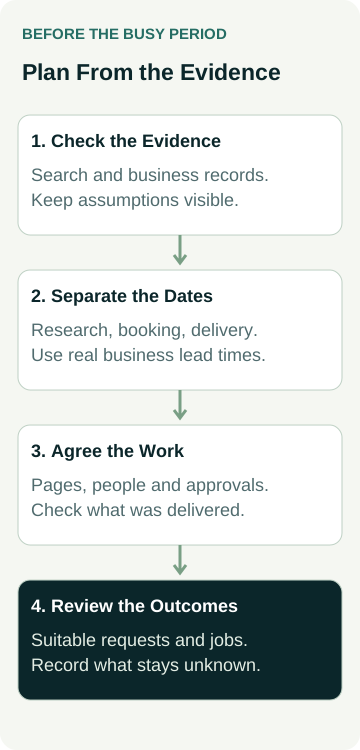
Consider an example pool-maintenance business that offers routine servicing and equipment assessments. The owner believes requests increase before the local holiday period, but has not yet compared complete records.
The provider’s first task is to check that assumption against available search and enquiry history. The owner supplies service details, actual coverage and booking lead times. The plan records the missing enquiry-source information instead of treating all past jobs as search-generated work.
The existing service page is unclear about whether equipment replacement can be booked directly. The owner confirms that the business first assesses the equipment. The agreed page update explains that next step and the information a customer needs to request an assessment.
The developer receives the approved wording and checks the implemented page and enquiry route. The owner agrees who updates availability as the schedule changes. A later review compares the relevant search evidence and suitable requests with the recorded assumptions.
This example ends with defined work and a review, rather than an invented increase in bookings. If the records do not support the expected pattern, the provider should explain whether to change the timing, investigate another service or keep the work limited to fixing the demonstrated page problem.
Choose a Realistic Scope if the Busy Period Is Close
When the deadline is near, ask what can be delivered and checked in the available time. Clear service wording, accurate availability and a working enquiry route may be a useful first stage. The proposal should distinguish those completed improvements from the search results it hopes to influence.
Resolve known blockers early. A provider cannot finish a content update while waiting for facts only the owner can confirm. A recommended technical change may depend on your current developer. Agree who handles each dependency and what happens if it remains unresolved.
If you need near-term enquiries, discuss your existing customer channels and whether a separately scoped paid campaign is appropriate. Our SEO or Google Ads guide covers that wider channel choice. Neither route establishes that the business will fill its schedule by the deadline.
Seasonal planning can form part of ongoing SEO work. It may also begin with an assessment and defined implementation tasks. Use the audit or ongoing campaign guide to choose the delivery arrangement. Ask for the actual inclusions, fees and review points rather than assuming “seasonal campaign” describes a standard package.
Agree How the Season Will Be Reviewed
Before work begins, record the pages, services, area and periods you intend to compare. Note the website changes and any other campaign activity that could affect the observation. Keep the records available for the next planning cycle.
Ask the report to distinguish:
- Work completed and verified on the website.
- Search impressions and clicks for the relevant pages and queries, with the comparison limits stated.
- Suitable enquiries connected to those services where the source can be established.
- Accepted jobs and payments supported by the business’s own records.
Year-on-year comparisons can add context, but prices, capacity, service changes and other marketing may differ. A busy period does not establish that every new job came from SEO. A quiet period does not establish that the website work failed. Review the evidence before changing the next stage.
Agree who reviews the findings and when they will decide what to retain, change or investigate. If there is too little reliable outcome evidence, name the gap and the next observation. Keep the plan useful for the next season without presenting missing information as a result.
To discuss search work for a genuine service and its customer timing, view our SEO packages or talk to Matt about your website, service and deadline. Bring the records you have, explain the capacity you can offer and confirm the scope before committing to the work.