

Before paying for SEO content, ask how the writer will learn what your business does, which facts you need to supply and who will check the draft before publication. A useful writing scope includes research, business input, drafting, corrections and approval, with a named person responsible for each stage.
A writer can organise your information and explain it clearly. They still need reliable details about your services, customers and experience. If a proposal promises a number of pages but leaves that input unexplained, ask how the pages will become useful and accurate for your business.
This guide is for Australian small businesses commissioning service pages or articles through an SEO provider or writer. It helps you compare the work involved, including the time your own team will need to contribute.
Ask the writer to explain how an uncertain business fact moves from a question in the brief to an approved statement on the website.
Start With the Customer Question
Describe what the reader needs to decide after reading the page. A service page might help a customer understand which jobs you take, where you work and how to request a quote. An article might answer a question that arises before that customer is ready to enquire.
Ask the provider to explain the purpose of each proposed page and how it relates to the pages already on your site. A list of keywords or a promised word count does not explain why a customer needs another page.
Our separate service-page guide helps decide whether different services need their own explanation. Once that decision is made, the writing discussion should establish what information the page needs and where it will come from.
Google's people-first content guidance asks whether content provides original value, demonstrates relevant knowledge and avoids easily checked factual errors. Use those questions to assess the proposed approach. They do not mean a business owner must personally write every sentence.
Give the Writer Information They Cannot Guess
Ask how the provider gathers business information. They might interview the person doing the work, send focused questions, review approved documents or discuss a draft with you. Choose an approach your team can support and agree who will answer follow-up questions.
Useful input includes:
- The services you offer, the work you exclude and the actual area you serve.
- Questions customers ask before booking, and the information you need to quote.
- How the work normally proceeds, including dependencies that affect the customer.
- Approved examples, photographs and documents that explain your experience.
- Current terms or promises you are prepared to publish, with anything uncertain marked for clarification.
Explain what has changed since your current website was written. An old service page can contain an offer you stopped making. A competitor's page may describe a different service model. Neither should become a substitute for checking your actual business.
Keep personal customer details and confidential job information out of the general brief. Supply material that can be used appropriately, and tell the writer what needs separate approval before it becomes public.
Agree How Claims Will Be Checked
Ask the provider to distinguish general source research from facts about your business. Public documentation may explain how a product works. It cannot establish that your team installs it, offers a particular warranty or operates from a particular location.
Have the writer flag uncertain statements rather than fill the gap with plausible wording. Use this comparison when reviewing the process:
| Draft Claim | Useful Evidence | Action When Unconfirmed |
|---|---|---|
| A service or coverage area | Confirmation from the person responsible for the work, checked against current operations. | Ask a specific question; revise or remove the claim until it is confirmed. |
| A business promise | Current approved wording and the person authorised to confirm its conditions. | Hold the promise for clarification; avoid inventing a turnaround, guarantee or inclusion. |
| A project or customer result | Approved records supporting the description, with permission to publish the material. | Use an accurate approved description, or leave the example out. |
| A technical or industry statement | A suitable current source and review by someone who understands the subject where needed. | Check the source and context; do not treat another company's marketing as authority. |
The person checking a claim may be different from the person choosing the tone. A business owner can approve how a page reads while a service manager checks the work described. Make both responsibilities visible where your business needs them.
Google encourages accurate authorship information and warns against fabricated creator profiles. If the provider proposes a named author, expert biography or reviewer credit, confirm that the person and description are real and that the credit reflects their involvement.
A Worked Example: A Cabinetmaker Reviews a Service Draft
An example cabinetmaking business commissions a kitchen service page. The owner supplies information about custom kitchens, the quote process and its confirmed service area. The writer prepares a draft and highlights three statements needing a decision.
The draft says customers can visit a showroom on weekends. The owner explains that there is no public showroom. The wording is removed. The page instead explains the business's actual consultation process using details the owner confirms.
A sentence promises that every kitchen will be installed within two weeks. The owner cannot support that promise because the timing depends on the design, materials and other work at the property. The writer replaces it with an approved explanation of how timing will be discussed during quoting.
The draft also describes a photographed kitchen as a project completed by the business. The image was supplied as a style reference, not as evidence of the business's work. It is not published as a completed job. The owner provides an approved project photo and checks the accompanying description before it is used.
The writer records each correction and returns a new version. The owner checks the affected paragraphs and confirms the accurate service description. The provider still needs to check the page's links, layout and publication version separately.
No enquiry or ranking improvement is assumed in this example. The practical result is a page whose business claims have an identifiable source and a clear approval record.
Understand the Drafting Method
Ask who will write and edit the content, how they will use your input and whether tools or subcontractors are involved. The answer helps you understand the review process and where business information will be handled. Do not assume “written locally” establishes that the writer knows your work.
If generative AI is used, ask what it contributes and who checks the output. Google's generative AI content guidance says it can help with research and structuring original content. It also advises focusing on accuracy, quality and relevance. The tool used does not establish that a draft's business facts are correct.
Apply the same factual review to every drafting method. Ask the provider to show how questions, sources and corrections are handled. Request an example of their process without expecting them to disclose another customer's private brief.
Agree how material from other sources will be used. The writer should explain the source in their own work and add useful business context, rather than replace another company's name with yours. Do not supply competitor text as if it were your own approved copy.
Price the Complete Writing Job
Compare proposals using the same intended pages and responsibilities. Ask whether the scope covers research, an interview or brief, writing, factual corrections, editing, loading the content and checking the published page. Find out what you will receive if publication is handled by someone else.
Discuss revision limits before work begins. Correcting an unsupported business statement is different from deciding to target another service after the draft is written. Ask how both situations will be handled and which changes require a revised quote. No particular number of revisions suits every job.
Your own time belongs in the plan too. Name a person who can answer questions and review the content. If they cannot do that within the proposed schedule, discuss a smaller first stage or another review arrangement before approving a batch of pages.
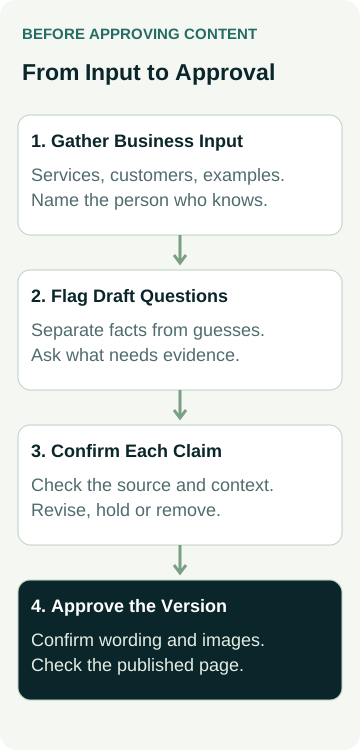
Use a short approval sequence:
- Agree the customer question, page purpose and business inputs.
- Review the draft's facts, uncertain claims and relevant sources.
- Confirm the corrected wording and approved images or examples.
- Check that the intended version was published with working links and presentation.
- Record who will update it when the business information changes.
Our SEO change-log guide helps keep completed website work separate from planned activity. A draft being supplied is one stage; an accurate approved page being published is another.
Review the Page and Its Results Separately
After publication, check that the page describes the intended service and gives customers the agreed next step. Keep that acceptance record alongside any later search or enquiry review.
A page count does not establish that useful work was delivered. A ranking change does not establish that the page generated qualified enquiries. Ask the provider to identify the reporting period, relevant page and searches, and what remains unknown. Our monthly SEO report guide explains that wider review.
If you are comparing content as part of an SEO engagement, review AWE's SEO services. To discuss the writing you need, contact Australian Web Experts with the service, the customer question and the information your team can supply. Ask how the business facts, draft review and publication work would be handled before committing to the content scope.