

A DIY website builder can be a sensible choice when your needs are manageable and you can finish the work yourself. Hiring a designer can be sensible when you need help planning, building and checking the site. The useful comparison is the same finished website, with the responsibilities made clear.
A subscription gives you a tool. A designer’s quote gives you an agreed scope of work. Neither tells you, on its own, who will write the service pages, prepare photos, check the phone layout or deal with an enquiry that does not arrive.
For an Australian small service business, start with the work the website must do and the time you can actually give it. Then choose a route you can complete and maintain. You do not need a custom build simply because you are a small business, and paying someone does not remove every owner responsibility.
Compare the Finished Job Before Comparing the Price
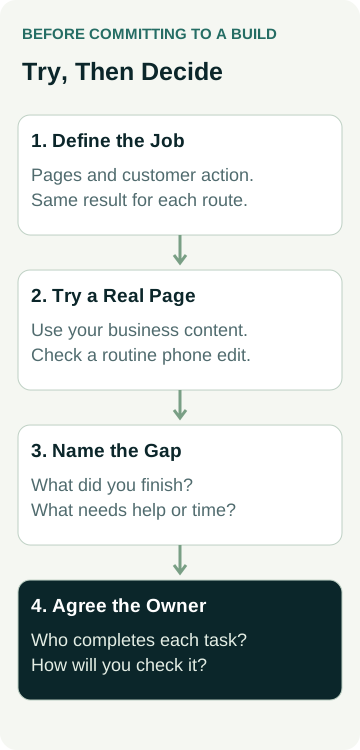
Write a short description of the result you need. For example: customers can understand your main services, check whether you cover their area, see suitable proof and request a quote. List any booking or other system that must work with the website.
Use that same description to assess a builder and a designer. Otherwise, you may be comparing a tool subscription with a project that includes work you have not allowed for on the DIY side.
Business Queensland’s guidance on choosing digital services and specialists suggests considering your experience, task complexity, whether the work is ongoing and the cost versus benefit. Those questions are more useful than assuming every owner should build a website or every business needs an agency.
For each route, name who will handle:
- Accurate service information, customer questions and page wording.
- Photos, permissions and any material you still need to gather.
- Page layout, navigation and the main customer action.
- Domain connection, enquiry setup and any required integrations.
- Checks on phones, important links and agreed enquiry delivery.
- Ordinary edits, support requests and renewals after launch.
If a designer includes copywriting, ask what information and approval they still need from you. If a builder supplies sample text, replace it with facts you can stand behind. A finished template is not the same as finished business information.
Choose a Route You Can Actually Finish
There are several ways to divide the work. A designer may use a website builder, and a professionally built website may still let you edit it yourself. Who does the work and which platform they use are separate decisions.
| Route | When It Is Worth Considering | Responsibility to Resolve |
|---|---|---|
| Build it yourself | You can learn the editor, supply the content and set aside realistic time to finish and check the required pages. | You own the build tasks; confirm what the platform’s support actually helps with. |
| Hire a designer | You need someone to turn your business requirements into an agreed, checked website and can supply facts and timely decisions. | Put content, setup, testing, handover and later support in the written scope. |
| Divide the work | You can manage some tasks but need help with a specific part, such as page planning, content or setup. | Find a provider willing to do that scope, with a clear handover between you. |
The third route needs an actual agreement. Do not buy a platform assuming any designer can take over your draft, or accept a build assuming you can change every part of it later.
A simple service website can still require careful wording and contact checks. A large feature list can also create unnecessary work. Include the functions needed for your customer’s next step, rather than choosing the route with the longest list of features.
Choose the route whose remaining tasks have a named person, enough time and a clear way to check completion.
Test the DIY Work With One Real Page
Before committing to a long subscription, use an available trial or demonstration to attempt one representative page. Check the trial terms first. You are testing your ability to complete your required work, rather than trying to finish a whole website in an evening.
Choose a real service and use material you have permission to publish. Keep the trial private while you assess it.
- Write what the service covers, who it suits and how an enquiry starts.
- Put that wording and a suitable image into the editor.
- Check the page on a phone as well as a computer.
- Try a routine edit you expect to make later, such as changing availability or replacing a photo.
- Record what you completed, what remains and where you needed help.
Separate difficulty writing the content from difficulty using the editor. A new platform may not solve uncertainty about which services to promote. Equally, having clear wording does not prove you can configure a booking system or check a contact form.
Use your own observed effort to plan the remaining pages. Do not treat one easy page as proof that every task will take the same time. Allow for the work outside the editor, including gathering material, account setup, testing and later changes.
If the trial stalls, name the reason before buying help. “I can edit text but cannot make the booking journey work” is a useful scope. “DIY is impossible” tells a provider much less.
A Worked Example: The Owner Can Edit but Cannot Finish
An example garden maintenance business needs separate explanations for regular garden care and one-off clean-ups. The owner has job photos, knows the service area and wants customers to request a discussion about suitable work.
In a builder trial, the owner completes a service page and changes a photo comfortably. They struggle to organise the navigation and do not know how to confirm the enquiry setup. They also have little time available before the intended launch.
That evidence supports asking for help with the unfinished work. The owner can describe the completed page, the remaining tasks and the need to make ordinary edits after handover. A provider can then explain whether they can finish the existing draft or whether another approach is needed. No takeover is assumed.
Now change one fact: the owner has time available, finishes the page structure and can follow the setup and checking instructions. DIY remains a reasonable route to assess. They should still verify the contact journey before relying on it.
The decision follows the owner’s demonstrated capacity and the required scope. There is no assumed enquiry increase, invented saving or universal deadline in either route.
Ask for Evidence of Editing, Support and Search Basics
Ask to see the actual editing task you expect to do. Can you change a service description or replace a photo using the access you will receive? Ask which changes require the provider and what those requests cost under the proposed arrangement.
Compare ongoing commitments as well as the starting payment. Check the required plan, domain and hosting arrangements, paid features, support, renewal terms and any extra work. Ask what happens if you stop paying or move elsewhere. Account access, content rights and the ability to export a complete website are separate questions; check the actual product and agreement.
For search, ask what the chosen route lets you configure and who will do that work. Google’s SEO starter guide covers helpful content, descriptive titles and links that help people and search engines understand pages. It also makes clear that indexing and first-place rankings are not guaranteed. A platform name or a designer’s involvement does not establish the search result you will get.
Once you are comparing designer proposals, use our questions to ask a web designer before accepting a quote for the detailed scope, cost, access and support discussion. Our trade website brief helps organise the facts and material whichever route you choose.
Discuss the Work You Need Help Completing
Choose DIY when the required tasks fit your skills, available time and support options. Choose professional help when the written scope resolves work you cannot reasonably complete yourself. Revisit the choice if the trial or proposal reveals a different constraint.
You can compare AWE’s current website packages with your requirements. To discuss a build, contact Australian Web Experts with the services you want to explain, any existing draft and the tasks you need help completing. Confirm the proposed platform, responsibilities and handover before committing.