

Before you accept a website quote, get clear answers about what will be built, who supplies the content, what you will pay after launch and how you can move the website later. Ask the designer to put those answers in the written scope.
A quote for “a five-page website” leaves a lot open. Five pages could include carefully written service information, your own job photos and a tested enquiry form. It could also mean five pages of a template with the words left for you to write.
If you run a trade or small service business, compare the job the website needs to do. A customer should be able to work out whether you handle their problem, whether you service their area and how to contact you.
These questions give you a practical way to compare quotes before paying a deposit.
Still deciding whether to build it yourself? Compare a DIY builder with hiring a designer before requesting a scope.
1. What Exactly Is Included in the Build?
Ask for the page list and the work included on each page. A bathroom renovator might need a homepage, service information, a project gallery, an about page and a contact page. The scope should also say who writes the words, prepares images and loads the finished content.
Ask about the details that matter to your business: a click-to-call phone number, an enquiry form, a way to add completed jobs and any booking system you already use. If a feature depends on a paid service, have its fee listed separately.
“Mobile friendly” also needs a practical definition. Ask which screens and browsers will be checked, and whether the menu, images, form and phone links are included in that check.
Before requesting quotes, write down what customers need from the site. The Australian Government's business website guide recommends defining goals, planning the page structure and testing before launch. Those are useful things to ask a designer to explain in their proposal.
2. Who Writes the Copy and Supplies the Photos?
If you are expected to supply everything, work out when you can realistically do it. A build can sit waiting while the owner tries to write service descriptions between jobs.
Ask whether copywriting means writing from a conversation with you, editing your draft or loading text you provide. Confirm how many rounds of changes are included and who checks the finished facts.
Give the designer accurate services, actual service areas and any credentials you want shown. Get permission before using customer testimonials, identifiable people or photos taken on someone else's property. Have the designer explain the rights attached to stock or commissioned images too.
For a trade business, a few clear photos of your own work can explain your capabilities. They need useful captions: what the job involved, what you did and any limits on the service. Avoid attaching a customer name or address without permission.
3. What Will I Pay Over the Next 12 Months?
Ask for separate figures for the build and ongoing costs. Check the tax treatment on each quoted amount so you compare like with like.
Ongoing items can include hosting, domain renewal, software subscriptions, maintenance, email and content changes. Some will be included in a plan; others may be billed separately. Ask when introductory prices expire and what renewal costs apply.
Use this comparison sheet. A blank means you still need an answer.
| Item | Quote A | Quote B | Evidence to request |
|---|---|---|---|
| Build scope and page list | Written inclusions and exclusions | ||
| Copy and images | Who supplies them, rights and revision allowance | ||
| Hosting and maintenance | Fees, responsibilities and renewal date | ||
| Domain and paid software | Registrant details and subscription costs | ||
| Future changes | Included allowance or charging method | ||
| Moving to another provider | What can be exported, fees and assistance |
Download the website quote comparison worksheet (CSV).
Here is a fictional example, using GST-exclusive figures throughout. Quote A charges $3,000 for the build and $80 a month for hosting and maintenance. Quote B charges $2,200 for the build, $140 a month for hosting and maintenance, and a $240 annual software licence.
The first-year comparison is:
- Quote A: $3,000 + (12 × $80) = $3,960.
- Quote B: $2,200 + (12 × $140) + $240 = $4,120.
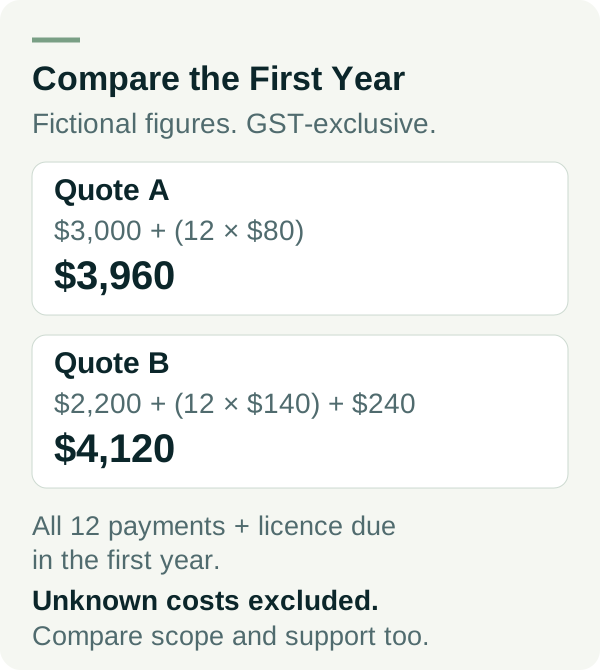
That calculation assumes all 12 monthly payments and the licence are due in the first year. It excludes domain renewal, email and any other costs that have not been supplied. These figures are an example, not AWE pricing or a market average. The cheaper build becomes the higher first-year total here, but the better choice still depends on the work and support included.
You can compare the service scope with our current website packages, then ask us about anything your business needs that is outside it.
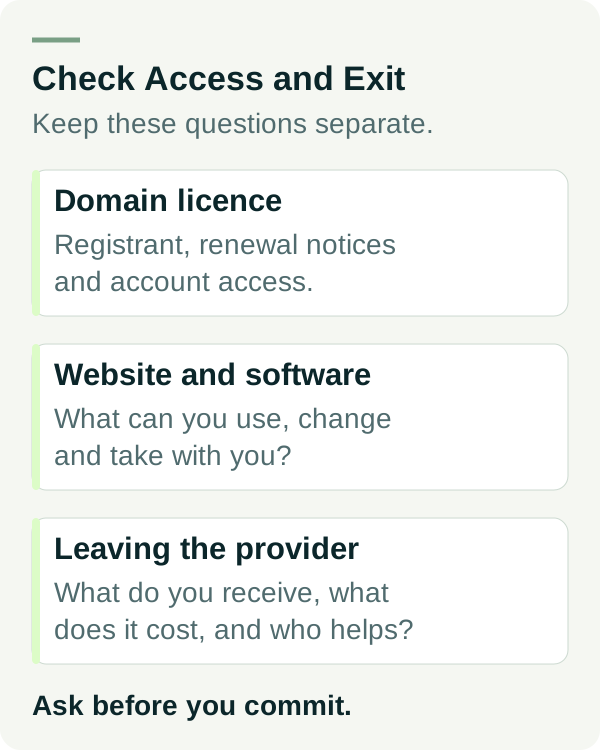
4. How Will I Control the Domain and Website Accounts?
Ask who will be recorded as the domain registrant, who receives renewal notices and how you access the account. For a com.au domain, check that the details identify the eligible business that should hold the licence.
auDA's com.au guidance explains how to check the recorded licence holder. Its .au licensing rules describe a licence to use the domain, rather than legal ownership of the name itself.
Website content, design files, hosting and software are separate questions. Ask what the agreement lets you use, change and take with you. A hosted website platform may offer a different exit path from a site you can move to another host. Ask for that path before committing.
Arrange access through proper account invitations or a secure handover. You should know how to reach the accounts without sending passwords around in ordinary email.
5. What Does “SEO Included” Mean?
Have the designer list the work. Depending on the scope, it could include page titles, descriptions, clear service headings, crawl checks and search measurement setup. It could also refer to an ongoing campaign with further content and review.
Ask which pages they expect customers to find and how they will check whether those pages are discoverable after launch. If you already have a website, ask which existing URLs will stay and how any URL changes will be handled.
Google's SEO starter guide explains that there is no automatic route to first place and no guarantee of indexing. Ask for specific work and reporting rather than accepting a ranking promise.
6. How Will Customers Enquire, and How Will That Be Tested?
Ask the designer to show the enquiry path on a phone. Can a visitor find the service, read the useful details and call or send a request without hunting around?
For appointments or variable jobs, decide what the website can confirm before agreeing on booking software.
Agree on the information you need to respond. A general trade enquiry might ask for contact details, a suburb and a short description of the job. Add other fields when they help you assess the request. Consider how enquiries will reach you when you are on site.
Ask how the form labels, keyboard navigation, error messages and confirmation will be checked. The W3C guidance on form labels explains why fields need labels that are correctly connected to the controls. A form looking tidy does not prove that everyone can use it.
If accessibility work is included, agree its review scope and evidence so you can compare what each provider will check.
The handover should include an agreed test of form delivery and phone links. If analytics are included, ask what an enquiry measurement represents. When the build is ready, use the small-business website launch checklist to record the checks and repeat them on the public site. A click on a phone number does not establish that a conversation or booked job happened.
7. What Happens After Launch, or If I Need to Leave?
Find out who handles updates, backups, faults and ordinary content changes. Ask what support covers, how to request it and whether there are stated response times. Be clear about any work that needs another quote.
Agree on a handover list. It should identify the accounts, access method, renewal dates, support contact and any editing instructions included. Ask how a backup is restored where that is part of the service.
Then ask the exit question directly: “If I change provider, what do I receive, what does it cost and who helps with the move?”
For an existing website, the answer should also cover the domain, email and important page addresses. Moving a website should be planned around those dependencies.
Put the Unanswered Questions Back to the Designer
Copy this into your reply to a quote:
Before I accept, can you confirm the page and feature list, who supplies the words and photos, all ongoing fees, domain and account access, the SEO work included, launch testing and the process for moving to another provider? Please add any exclusions or extra charges to the written scope.
If the designer can explain those points clearly, you have a better basis for deciding whether the quote fits your business.
Need help working out the website scope for your trade or small business? Talk to Matt about what customers need to do on your site and what you need included.